Your baby is sitting up, reaching for everything on your plate, and you are fairly sure they are ready for solid food. You have heard yogurt is a good first food, but the dairy aisle is not making this easy.
So, which one actually belongs in a 6-month-old’s bowl?
The short answer: plain Greek yogurt is one of the best first foods you can give a baby. It is safe from around 6 months, it carries protein and calcium, and the thick texture makes it easier for small hands and small spoons to handle. The rest of this article is the longer answer, covering which tub to pick off the shelf, how to serve it at every stage, and three recipes you can make in under five minutes.
If you are still pregnant, the guidance for you is different from the guidance for your baby. Our guide to yogurt during pregnancy covers what is safe before the baby arrives.
When babies can start eating yogurt
Most babies are ready for solid food at around 6 months. The NHS, the American Academy of Pediatrics, and the World Health Organization all put the start of solids at around this age, and all three list full-fat dairy, including plain yogurt, among the foods you can offer from the beginning.
There is no need to wait until your baby turns one. That rule applies to cow’s milk as a drink, not to dairy as a food. Parents mix the two up constantly, so it is worth being clear about why they are different.
Why babies can have yogurt before age one but not cow’s milk as a drink
Cow’s milk as a main drink is not recommended before 12 months. It does not have the right balance of nutrients to replace breast milk or formula, and in large quantities it can interfere with iron absorption, so a baby filling up on milk could end up short on iron.
Yogurt is different. Fermentation partly breaks down the protein and the lactose, which makes it easier for a baby to digest.
And because yogurt is eaten as a food, a few spoonfuls alongside other solids, it does not displace breast milk or formula the way a full bottle of cow’s milk would. It adds to their milk feeds instead of standing in for them.
How to choose the right yogurt for a baby
You need three things to check, in this order.
No added sugar. This is the one that matters most. Most flavoured yogurts, and almost every product labelled “baby yogurt” contain added sugar. All yogurt has some natural sugar in the form of lactose, which is fine. The line you are looking for on the label is “added sugars”, and for a baby that number should be zero.
Fat content. The NHS recommends full-fat dairy as the default for children under 2. The reason is energy, not safety: a baby has a small stomach and high energy needs, and fat carries the most calories per spoonful. Low-fat yogurt also works. If your child eats a varied diet and is growing well, a plain low-fat tub sits well within it, particularly with fruit stirred through.
Real dairy with live cultures. You want yogurt made by fermenting milk, not a milk-flavoured product thickened with starch. Check the ingredients list: milk and live cultures should be the main entries. Those cultures (probiotics) support gut health and make the yogurt easier to digest.
One common trap is “baby yogurt”. Those small, brightly packaged tubs marketed at parents are usually regular yogurt in a smaller container at a higher price, and many contain added sugar or fruit purees you did not ask for. You do not need a special baby product. A tub of plain, unsweetened Greek yogurt is the better pick.
Greek yogurt vs regular yogurt for babies
Greek yogurt is strained more than regular yogurt, which removes much of the whey. What is left is thicker, higher in protein, and lower in lactose.
For a baby, the practical difference is texture: Greek yogurt clings to a spoon and to fingers, which makes self-feeding less messy and more successful. Plain regular yogurt with no added sugar works too. It is just runnier.
How to serve Greek yogurt at every stage
6 to 7 months: plain and simple
At this age your baby is tasting real food for the first time. Keep it plain and unsweetened so they learn the actual flavour of yogurt rather than the flavour of sugar.
Start with a teaspoon or two, once a day. You can load a small spoon and hand it to them, or let them dip their fingers straight into a shallow bowl. Both are valid, and both are messy. Give the yogurt on its own for the first few days, with no other new food at the same time, which makes any reaction easier to spot.
There is no strict daily amount at this stage. Their appetite and their milk feeds together will guide how much they eat.
8 to 11 months: adding flavour and texture
By now most babies handle thicker textures and are getting more confident with a spoon. This is when yogurt becomes a vehicle for other flavours. Try stirring in one of these at a time:
- Mashed ripe banana, naturally sweet with no sugar needed
- Smooth mango puree
- Mashed pawpaw (papaya)
- Finely blended oats, which add texture and keep them fuller for longer
Add one fruit at a time. It sweetens the yogurt without sugar, and if something disagrees with your baby you will know which fruit to blame.
A quarter to half a cup of yogurt per serving is plenty at this age, alongside their other meals and milk feeds.
12 months to 2 years: fruit as the sweetener
Toddlers can eat a wider variety, and plain yogurt with fruit stirred through is an easy way to give them protein and calcium without added sugar. Mashed banana, smooth mango, blended pawpaw, or quartered grapes all work. Cut grapes into quarters lengthways, or blend them, because whole grapes and grape halves are a choking risk for young children.
Sweetened yogurt is worth considering only if sugar is already a regular part of your child’s diet. If it is not, there is no reason to introduce it here.
After age 2: when lower-fat dairy fits
From 2, lower-fat milk and dairy can become the main choice, provided your child eats a varied diet and is growing well. The NHS makes this the suggested transition point.
Three easy yogurt recipes for babies and toddlers
Mango yogurt dip (6 months and up)
Blend half a ripe mango until smooth. Stir two tablespoons of the puree into a small bowl of plain Greek yogurt. Serve as it is, or use it as a dip for soft finger foods.
Cut those into finger-length strips, so a spear of banana and not banana coins, since round pieces are the shape most likely to block a small airway.
Frozen yogurt dots (8 months and up, once the pincer grasp appears)
Blend plain Greek yogurt with half a ripe banana until smooth. Drop small spoonfuls, about the size of a coin, onto a parchment-lined plate. Freeze for 2 to 3 hours, then store them in a freezer bag.
Take the dots out a few minutes before serving and let the edges soften, because a dot straight from the freezer is hard enough to be a choking risk. Serve them with your baby sitting upright, and stay with them while they eat. These are a tidy snack and a good option for teething babies, because the cold soothes sore gums.
Yogurt and oat breakfast bowl (12 months and up)
Cook two tablespoons of oats until soft. Let them cool, then stir them into a few tablespoons of plain Greek yogurt. Top with mashed banana or a spoonful of fruit puree. The oats add fibre and keep a toddler satisfied for longer.
Dairy allergies: what to watch for
Cow’s milk is one of the more common childhood food allergies, though it affects a relatively small number of children, around 2 to 3% of babies under one, with four out of five outgrowing it by school age.
Current NHS guidance is to introduce dairy from around 6 months rather than holding it back.
If you have any reason to suspect your child might have a dairy allergy or sensitivity, speak with your paediatrician before introducing any dairy products. Symptoms to watch for in the hours after feeding include:
- Rash or hives, especially around the mouth or face
- Swelling of the lips, eyes, or face
- Vomiting or digestive upset
- Unusual fussiness or irritability
- In more serious cases, difficulty breathing, which needs emergency help immediately
This is why the first few servings go on their own, as covered above. If you are unsure, ask your doctor before you start rather than after.
The most important rule: keep it plain
If you take one thing from this article, take this: keep it plain. Check the label for added sugars and put the tub back if that number is anything above zero, and walk past the “baby yogurt” shelf with its fruit puree already stirred in. A plain, unsweetened Greek yogurt gives your baby protein, calcium and live cultures in a texture they can handle. Sweeten it yourself with real fruit when they are ready, and you stay in control of what goes in.
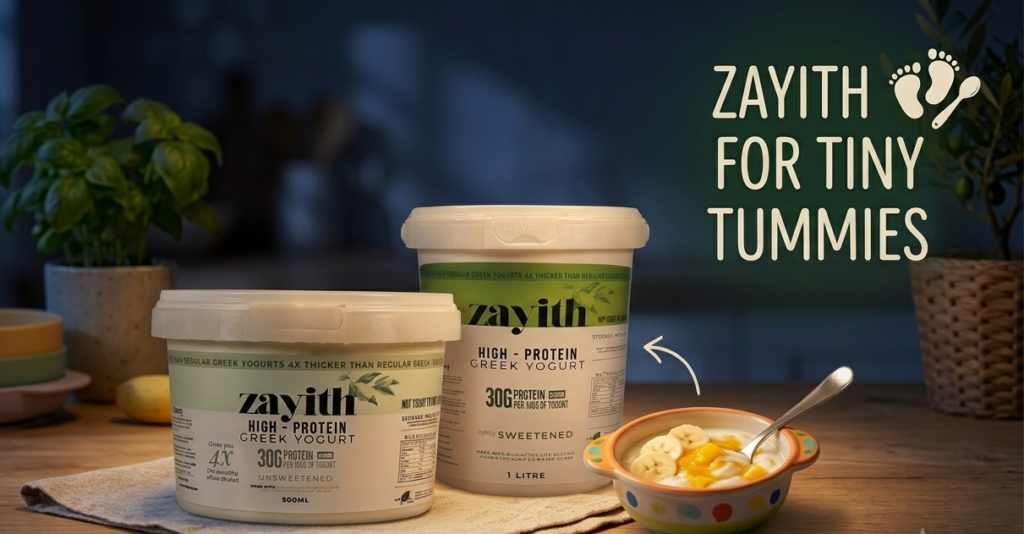
Zayith Low-Fat Unsweetened Greek Yogurt is strained the traditional way, made in Lagos from real milk with live cultures, and carries no added sugar. That last part is the one that matters most for a baby. If your child is under 2, keep the fat in the rest of what they eat, since that is where the NHS puts the default.
You can order online for delivery within Lagos, usually in 24 to 48 hours. You can also find Zayith in 647 stores across 29 cities and towns.
Frequently asked questions
When can babies have Greek yogurt?
From around 6 months, once your baby has started solids and can sit up with support and hold their head steady. There is no need to wait until age 1.
Is Greek yogurt safe for a 6 or 7-month-old?
Yes. Plain Greek yogurt is safe and suitable from about 6 months. Keep it unsweetened and watch for any sign of a dairy allergy the first few times you offer it.
Can babies have fat-free or nonfat Greek yogurt?
It is safe, but it is the weakest pick as a baby’s main yogurt. Taking the fat out removes energy a growing baby gets from dairy, and flavoured fat-free tubs often carry added sugar to make up for it. A plain tub with its fat left in, full-fat or low-fat, is the better pick.
How much Greek yogurt can a baby eat per day?
There is no strict limit. Let their appetite guide you, alongside their other meals and milk feeds. A teaspoon or two at 6 months, building to a quarter or half a cup by 9 to 12 months, is a reasonable range. The main thing to watch is that dairy does not crowd out other foods, particularly iron-rich ones.
Can a 1-year-old have Greek yogurt?
Yes, and very little changes at this birthday. Your toddler can now also have cow’s milk as a main drink, but the dairy they eat should stay full-fat until they turn 2. The other change is texture: a 1-year-old can handle chopped fruit stirred through, not just purees, as long as anything round is quartered lengthways.
Can I freeze yogurt for my baby?
Yes. Frozen yogurt, in dots, as bark, or in popsicle moulds, works well as a snack and soothes teething gums. The live cultures may reduce in number during freezing, but the protein, calcium and flavour stay the same.
Which Zayith yogurt is best for my baby?
The unsweetened one. Our Low-Fat Unsweetened Greek Yogurt is plain with no added sugar, which is the thing that matters most at this age. Sweeten it yourself with mashed banana or another soft fruit.